

When business owners evaluate commercial construction options, the real question isn’t just “What does it cost today?”—it’s “What will this building cost over its entire life?”
Steel commercial buildings consistently outperform traditional materials like wood and even some concrete structures when you look at the lifespan-to-cost ratio.
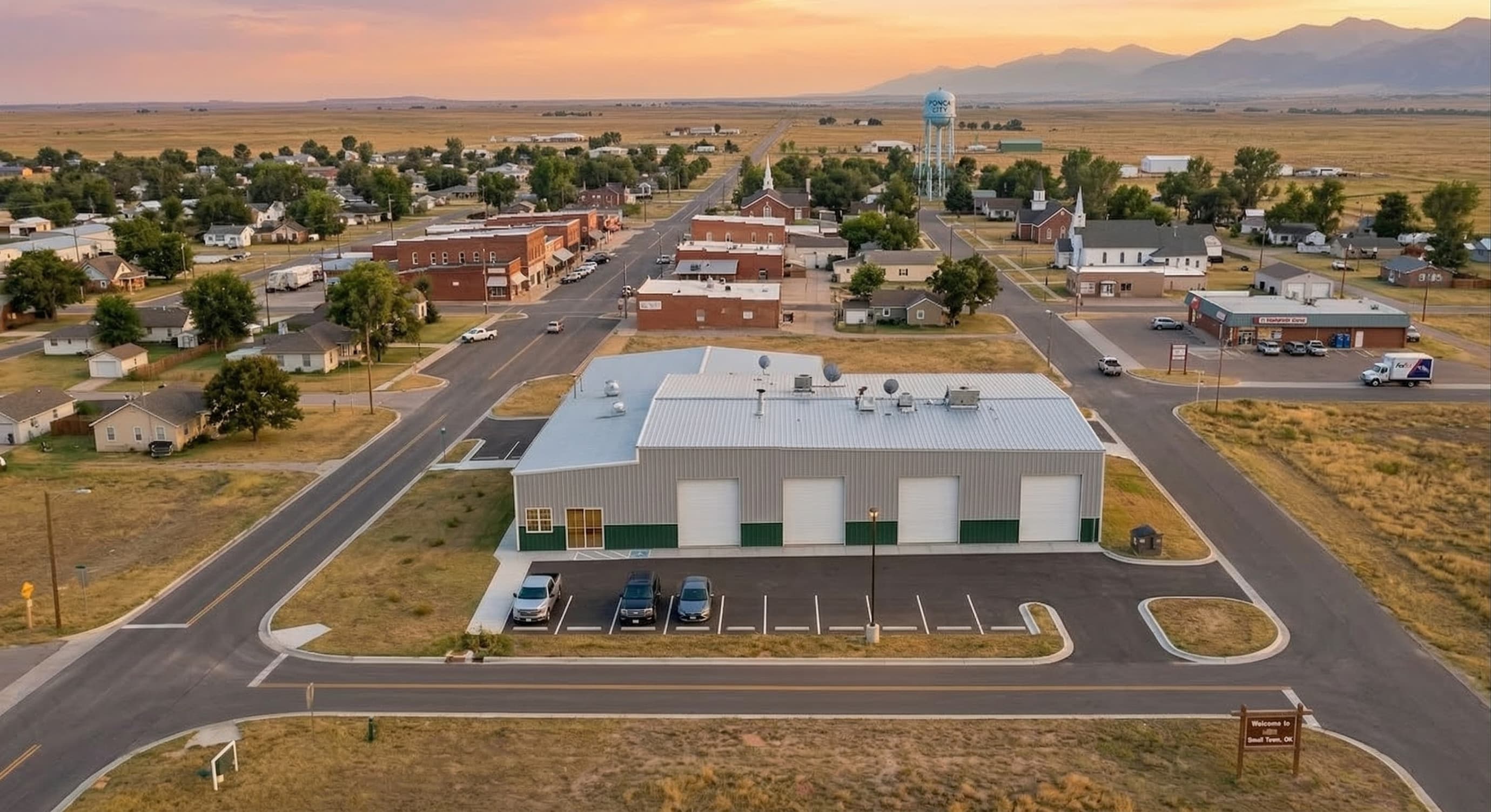
The photo below shows a typical steel commercial structure in a small-town setting—a simple, durable building design commonly used for warehouses, service shops, retail spaces, and municipal facilities. These structures illustrate why steel has become the go-to choice for cost-efficient commercial construction.
Understanding the Lifespan vs Cost Ratio
The lifespan vs cost ratio measures how long a building lasts relative to the money spent building and maintaining it. A simplified formula looks like this:
Total Construction + Maintenance Cost ÷ Years of Useful Life
The lower the cost per year, the better the investment. Steel buildings often produce one of the lowest cost-per-year structures available in commercial construction.
| Building Material | Average Lifespan | Maintenance Level |
|---|---|---|
| Wood Frame | 30–50 years | High |
| Concrete | 50–75 years | Medium |
| Steel | 50–100+ years | Low |
Properly engineered steel structures can last well over a century with basic maintenance.
Initial Cost of Steel Commercial Buildings
Steel buildings are often less expensive to construct than traditional buildings due to several factors:
Faster Construction
Prefabricated steel components reduce labor time dramatically.
Lower Labor Costs
Steel systems require fewer workers and fewer construction stages.
Less Waste
Precision manufacturing means fewer material losses.
Typical Cost Ranges
- Steel commercial buildings: $15–$40 per sq ft (structure only)
- Traditional construction: $50–$150+ per sq ft
Maintenance Cost Over Time
This is where steel really shines. Steel buildings resist:
- Rot
- Mold
- Termites
- Warping
- Fire damage
Maintenance usually involves simple items such as:
- Paint or protective coating
- Occasional fastener checks
- Roof maintenance
Wood buildings require constant attention—pest treatment, structural repairs, moisture protection, and more.
Pro Tip
Structural Durability
Steel buildings perform exceptionally well in harsh environments. They are engineered to withstand:
- Heavy snow loads
- High winds
- Seismic activity
- Temperature changes
For rural towns, industrial areas, and agricultural regions, steel buildings provide reliable durability with minimal upkeep.
Energy Efficiency Advantages
Modern steel buildings can include:
- High-R insulation systems
- Reflective roofing
- Energy-efficient wall panels
These improvements significantly lower heating and cooling costs, especially for large commercial spaces.
Adaptability and Expansion
One overlooked advantage of steel buildings is future flexibility. Steel structures can easily be:
- Expanded
- Modified
- Reconfigured internally
This means businesses can grow without demolishing and rebuilding.
Real-World Example
Imagine a 10,000 sq ft commercial building:
| Steel Building | Wood Construction | |
|---|---|---|
| Construction cost | $300,000 | $450,000 |
| Lifespan | 75 years | 40 years |
| Cost per year | $4,000 | $11,250 |
Even before factoring in maintenance, the steel building provides almost three times better long-term value. Get your exact estimate →
Why Steel Buildings Are Popular in Small Towns
Looking again at the image, you can see why towns often rely on steel commercial structures:
- Quick to build
- Durable in rural climates
- Cost-efficient for municipal budgets
- Easy to maintain
From equipment garages to local businesses, steel buildings support economic growth without excessive infrastructure costs.
The Bottom Line
When evaluating commercial construction, steel buildings consistently deliver the best lifespan vs cost ratio. They provide:
- Long service life
- Low maintenance costs
- Faster construction
- High structural durability
- Lower long-term operating costs
For business owners, municipalities, and developers looking to maximize long-term ROI, steel commercial buildings remain one of the smartest investments in modern construction.